
Als Amazon-Partner verdiene ich an qualifizierten Verkäufen.
First Winter in Germany: Stop Mould Before It Starts (Hygrometer + Drying Laundry Guide)
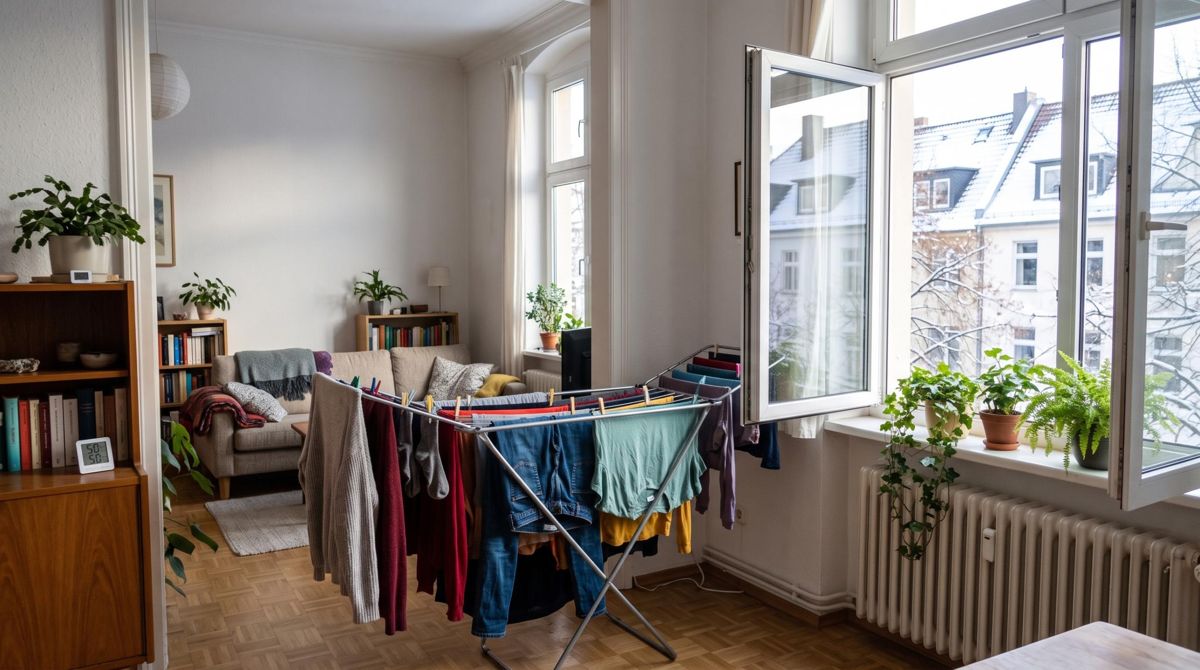
Moving to Germany comes with plenty of changes, from sorting waste into multiple bins to learning the rhythm of quiet hours. But once the cold autumn and winter months settle in, many newcomers face an unexpected household puzzle: damp walls, condensation on window edges, and black mould patches (known locally as Schimmel).
Digital Hygrometer (indoor humidity meter)
It shows you when it's time to air the room. Pick one that:
- Shows humidity in % (and ideally temperature)
- Has a big, easy-to-read display
- Can stand on a shelf or hang on the wall
Back home in South Asia, windows often stay open, breezes move freely, and warm sunshine dries clothes on the balcony within hours. In a sealed, well-insulated German flat in winter, that same moisture stays trapped inside. The good news: preventing mould is easy once you know how moisture moves and how to let it out.
Why Desi Homes Are Prone to Winter Moisture
Daily life in a South Asian home brings rich flavours, warmth and hospitality, but it also puts a lot of water vapour into the air:
- Long simmering and steam: Curries, boiling daal, steaming rice and hot chai release big clouds of steam. When cold weather keeps kitchen windows shut, that warm vapour settles on cold outside walls.
- Drying heavy laundry indoors: When it gets cold outside, drying racks move into bedrooms and hallways. According to utopia.de, a single load of wet laundry holds about 2 to 4 litres of water. When those clothes dry inside, all that water goes into your room air.
- Tight modern insulation: German buildings are well sealed to save heating. Without active airing, warm moist air has nowhere to go and collects in corners, behind wardrobes and around window frames.
The Golden 40–60% Humidity Rule
To keep indoor air fresh and stop mould from getting a foothold, aim to keep indoor relative humidity between 40% and 60% (source: utopia.de).
When humidity stays above 60% for long, moisture settles on cold window corners and outside walls, which is where mould likes to grow. Dropping far below 40% can make the room air feel uncomfortably dry.
You can't really feel small changes in humidity, so a simple indoor meter (hygrometer) makes it easy to know when it's time to air the room.
How to Air the Room Correctly (Stoßlüften)
Many of us tilt a window open (Kippstellung) for hours to get some air without freezing the flat. In winter, this does more harm than good. It cools the wall around the window while swapping very little air, so moisture collects right where mould loves to grow.
Instead, use the standard German method called Stoßlüften:
- Turn the radiator thermostat down while airing so you don't waste heating.
- Open the windows fully for just a few minutes (shorter when it is very cold outside, a bit longer in milder weather).
- If you can, open windows on opposite sides of the flat at the same time (Querlüften) for a fast air exchange.
- Close the windows and turn the heating back to your normal setting.
This quick burst swaps humid air for dry outside air in minutes, while your walls and furniture keep their warmth.
Drying Laundry Indoors Without Causing Mould
Balconies are often freezing or wet in winter, so drying clothes inside is normal for many renters. If you do it, keep these points in mind:
- Pick a big, heated room: Put the rack in a large, warm room like the living room. Avoid bathrooms, kitchens and bedrooms, which already have more moisture.
- Keep it away from the wall: Never put the rack flat against a wall or in a tight corner. Leave space so air can move around the clothes.
- Air the room while clothes dry: Your laundry is putting 2 to 4 litres of water into that room. Do Stoßlüften a few times while it dries so the moisture can escape.
Simple Items That Help
You don't need expensive machines. A few basic things are enough to stay ahead of mould:
- A small digital hygrometer: Keep one in the living room and one near the laundry rack so you can see the humidity and know when to open the windows.
- A space-saving laundry rack: A foldable rack is easy to set up in the middle of a warm room and put away afterwards.
- A moisture absorber box: Useful for closed cupboards, shoe cabinets or corners where air doesn't move much.
Printable Winter Moisture Checklist
- Check the hygrometer: humidity between 40% and 60%.
- Cook with lids on, use the extractor hood, and air the kitchen right after cooking.
- Put the laundry rack in a large, heated room, away from walls.
- Do Stoßlüften: open windows fully for a few minutes instead of keeping them tilted.
- Wipe condensation off window panes and sills every morning.
- Leave a small gap between big furniture and cold outside walls.
Frequently Asked Questions
1. Is keeping my window tilted (Kippen) all day enough?
No. On cold days a tilted window cools the wall around the frame while barely refreshing the air. That cold spot collects moisture and raises the risk of mould. Open the window fully for a few minutes instead.
2. Can I dry laundry in the bedroom or bathroom?
Better not. One load releases about 2 to 4 litres of water, and bedrooms already collect moisture from breathing at night. Use a larger, heated room with good air flow.
3. What should I do if I see dark mould spots on the wall?
Don't ignore it. Take clear photos, check your airing routine, and tell your landlord or property management (Hausverwaltung) soon, especially if the spot comes back or grows. Ask them how they want it handled.
More helpful posts
- Diwali 2026 in Germany: A Simple Shopping Checklist for Your Flat
- Heizkosten 2026: What Heating Costs This Winter + Simple Ways to Pay Less
- Black Friday 2026: Desi Kitchen Watchlist for German Induction Stoves
- Gurpurab & Christmas: Small, Light Gifts to Take Home to India
- Deutschlandticket 2027: New Price, When to Cancel, and Is It Still Worth It?
- Rundfunkbeitrag (GEZ) Explained: Why You Got That Letter and What to Do
- Kindergeld 2026: How Much You Get and What's Changing Soon
- Perfect Masala Chai in Germany: What You Need (Even on an Induction Stove)
- St. Martin, Nikolaus & Advent: A Guide for Desi Parents in Germany